What to Compost: A Complete UK Guide to Green and Brown Materials
What to Compost: A Complete UK Guide to Green and Brown Materials
If you’ve ever stood in your kitchen holding a soggy tea bag and wondered whether it can go in the compost bin, you’re not alone. Composting is one of those things that sounds straightforward until you’re actually doing it, and suddenly you’ve got questions about whether that cardboard pizza box counts, or what to do with the mountains of grass clippings your lawn seems to generate every other weekend from April onwards.
The good news is that once you understand the basic principle behind composting — and specifically the difference between “green” and “brown” materials — it all clicks into place. This guide will walk you through exactly what you can and can’t add to your home compost heap, how to get the balance right, and what to do with some of the trickier items you’ll encounter in a typical UK household.
The Science Behind It (Without the Boring Bits)
Composting is essentially controlled decomposition. You’re creating the right conditions for bacteria, fungi, and other organisms to break down organic matter into a dark, crumbly, sweet-smelling material that your garden absolutely loves. The key to making this happen efficiently comes down to two things: moisture and the ratio of carbon-rich to nitrogen-rich materials.
In composting circles, these are called “browns” (carbon-rich) and “greens” (nitrogen-rich). Neither term refers to actual colour — plenty of “greens” are brown in real life, and some “browns” are green. The names are just a handy shorthand for the two categories your composting materials fall into. Get the balance roughly right, and your heap will break down reliably. Get it wrong, and you’ll end up with either a slimy, smelly mess or a dry pile that just sits there doing nothing for months.
The ideal ratio is roughly 2:1 or 3:1 of browns to greens by volume. You don’t need to measure anything — just aim to add a good layer of brown material every time you add a batch of greens, and you’ll be in the right territory.
Green Materials: The Nitrogen-Rich Additions
Greens are the activators. They’re moist, nitrogen-rich, and they kick off the biological activity that heats up your heap and speeds up decomposition. In a UK garden and kitchen, you’ve got a surprising amount of green material at your disposal year-round.
Kitchen Greens
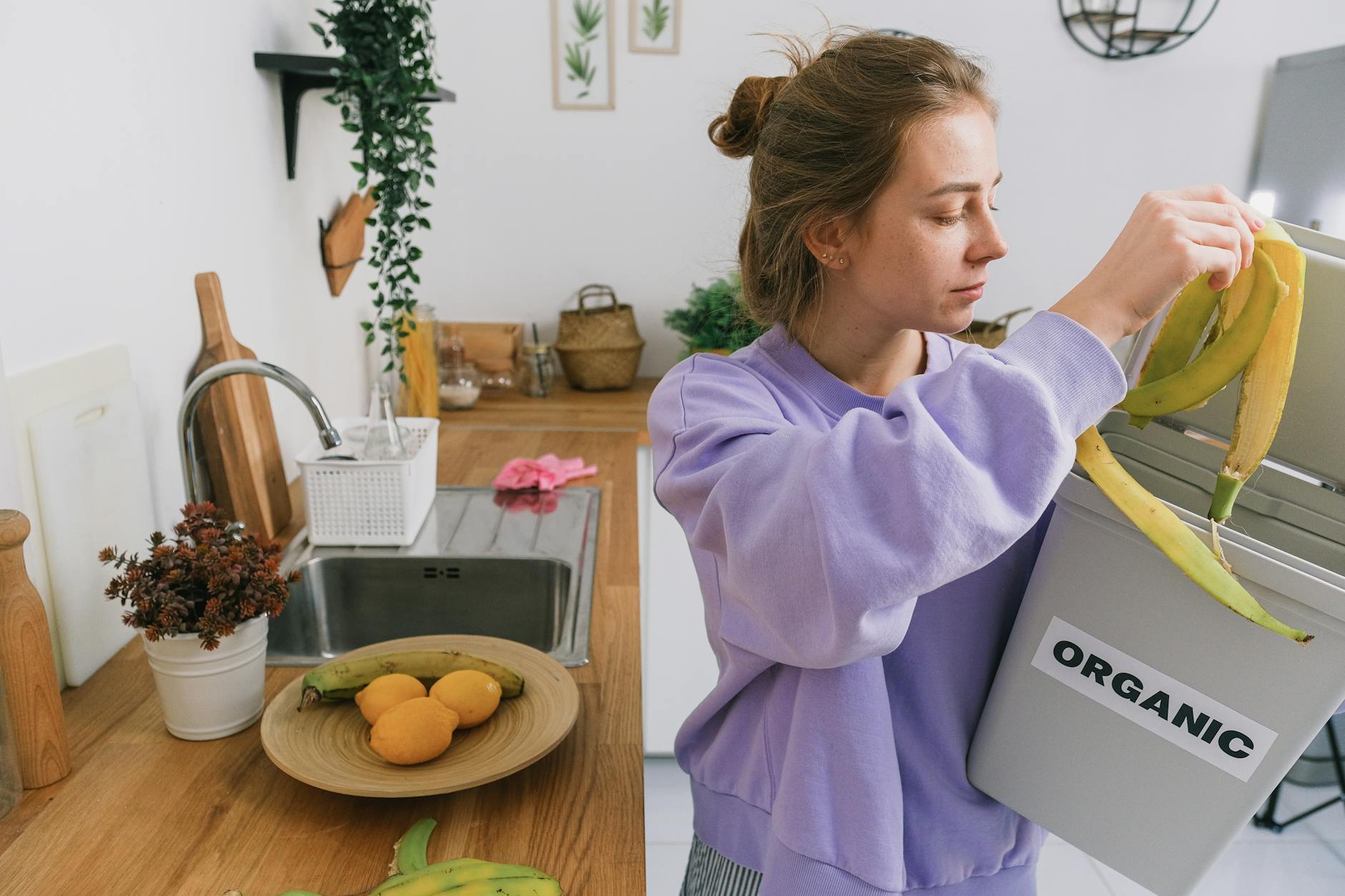
Your kitchen is one of the most reliable sources of composting material. Most raw fruit and vegetable scraps are excellent additions — apple cores, banana skins, carrot tops, onion skins, lettuce leaves that have gone past their best, coffee grounds, and loose leaf tea or tea bags (check the label first; some bags contain plastic and can’t be composted). The peelings from a Sunday roast prep session alone can keep a compost heap happy.
A few specifics worth knowing for UK households:
- Tea bags: PG Tips, Yorkshire Tea, and Clipper have all moved to plastic-free or fully compostable bags, but always double-check the packaging. If in doubt, tear the bag open and compost the leaves separately.
- Coffee grounds: These are fantastic — slightly acidic, nitrogen-rich, and worms absolutely love them. Grounds from a cafetière or filter machine can go straight in.
- Citrus peel: Despite the old advice to avoid it, citrus peel composts absolutely fine in a healthy heap. The concern was that it could deter worms in large quantities, but in normal amounts it’s perfectly fine.
- Crushed eggshells: These are borderline — they don’t contribute much nitrogen, but they add calcium and help with aeration. Worth adding, though they take a while to break down fully.
Garden Greens
From late spring through to autumn, your garden will generate huge quantities of green material. Fresh grass clippings are probably the most abundant, but be careful — they compact easily and can turn into an anaerobic, smelly mat if you add too much at once. Either mix them well with browns as you go, or spread them thinly across the heap rather than dumping a full mower bag in one go.
Other excellent garden greens include young weeds (pulled before they set seed — bindweed and dandelions are fine at this stage), spent bedding plants, soft prunings from herbs and perennials, and any leafy annual plant material. Nettles deserve a special mention — they’re particularly nitrogen-rich and are often cited as a brilliant compost activator. If you have a patch of nettles at the back of the garden, consider yourself lucky.
Brown Materials: The Carbon-Rich Additions
Browns are the structural element of your compost heap. They create air pockets, absorb excess moisture, and provide the carbon that balances out all that nitrogen from your greens. Without enough browns, you end up with a wet, smelly heap. With too many browns and not enough greens, the pile just sits there, dry and inert.
The great thing about browns is that most households in the UK generate plenty of them without even trying, and many come directly from your recycling bin — cardboard and paper that’s torn up and added to the compost is arguably more useful there than in the kerbside recycling collection.
Cardboard and Paper
Corrugated cardboard is one of the best brown materials available to UK composters. Cereal boxes, toilet roll tubes, egg boxes, cardboard packaging from online orders — all of it can go in, as long as you tear or scrunch it up first and remove any plastic tape or labels. Large flat sheets can mat together and block airflow, so always break them down before adding.
Newspaper, plain office paper, paper bags, paper coffee cups (the ones without plastic lining), and brown paper bags from the greengrocer all compost well. Glossy magazines and heavily printed or laminated paper are better off in the recycling bin.
Autumn Leaves
Autumn leaves are a seasonal goldmine, and in the UK we’re blessed with an abundance of them from October through to December. However, they’re quite slow to break down and are best handled slightly differently from other browns. In large quantities, it’s worth making a separate leaf mould pile — simply stuff leaves into old compost bags or wire mesh cages, keep them moist, and leave them for one to two years. The result is a gorgeous, crumbly material that’s superb as a soil conditioner or seed-sowing compost.
In smaller amounts, leaves can absolutely go directly into your main compost heap, layered with greens. Avoid adding too many evergreen or waxy leaves (holly, bay, laurel) as they break down very slowly and can cause problems in large quantities.
Other Brown Materials
- Woody prunings: Twigs and small woody stems can be composted, but they break down far more quickly if you chip or shred them first. A garden shredder is a worthwhile investment if you have hedges or shrubs to manage regularly. Shredded wood chip is also a brilliant brown material — many UK councils offer free wood chip from tree surgeons’ work, and some gardening groups organise collections through schemes like Chip Drop.
- Straw and hay: If you keep chickens or rabbits, or you’ve used straw as a mulch in the garden, it’s an excellent brown addition. Mixed with manure from small animals, it’s practically a compost heap in its own right.
- Sawdust and wood shavings: These work well but are very carbon-heavy, so use them in thin layers and mix well. Only use sawdust from untreated wood.
- Natural fibre fabrics: Old cotton or wool clothing cut into small pieces can be composted, as can wool fleece. Remove any synthetic threads or buttons first.
- Hair and nail clippings: A slightly surprising one, but both human and pet hair compost well and add nitrogen — so technically they’re greens, despite the name.
What Not to Compost at Home
There are certain materials that simply don’t belong in a home compost heap, either because they cause problems with the process, attract pests, or pose a hygiene risk. The following should be kept out of your garden composter:
- Cooked food and meat: Cooked leftovers, fish, meat scraps, and dairy products can all attract rats and other pests, and they break down in ways that create unpleasant smells. The exception is if you have a properly sealed food waste digester, bokashi bin, or a Hotbin composter, which can handle cooked food safely.
- Diseased plant material: Plants affected by club root, white rot, or other persistent soil-borne diseases should go in the council green waste bin, not your home heap. The temperature in a typical home compost pile isn’t high enough to kill off the spores reliably.
- Perennial weed roots and seeded weeds: Bindweed roots, couch grass, and plants that have already set seed can all survive a home compost heap and cause you enormous headaches when you spread the finished compost. Again, the council bin is your friend here.
- Coal ash: Wood ash in small quantities is fine (it adds potassium), but coal and barbecue briquette ash contains compounds that are harmful to soil and plants. Skip it.
- Cat or dog waste: These can harbour pathogens and shouldn’t go into a standard
compost heap. Use a dedicated pet waste digester if you want to deal with it at home, or simply bag it and bin it. - Treated or painted wood: Sawdust and shavings from untreated timber are fine, but wood that has been painted, varnished, or pressure-treated with preservatives can leach toxic chemicals into your compost. Check before you add it.
- Large quantities of any one material: Even materials that are perfectly safe to compost can cause problems if added in bulk all at once. A thick layer of grass clippings, for instance, will mat together and turn into a slimy, anaerobic mess. Mix everything well and add in thin layers where possible.
A few other items are worth a mention. Glossy or heavily printed paper — think magazine inserts and till receipts — is best kept out, as the coatings and inks are not always compost-friendly. Citrus peel is often cited as problematic, and whilst a handful of orange or lemon skins is unlikely to cause serious harm, very large quantities can acidify your heap and may deter the worms that help break everything down. Similarly, onions and cooked food in general are best avoided in an open heap, since they attract rats and other pests. If you want to compost cooked food scraps, a sealed bokashi system or a Hotbin-style insulated composter is far better suited to the task.
It is also worth being cautious about materials from unknown sources. Compost accelerators and the like aside, if you are not sure what a material is or where it has come from — particularly with any kind of industrial or agricultural waste — err on the side of caution and leave it out. The goal is finished compost you can trust and use freely across your garden.
Conclusion
Composting at home is one of the most straightforward things you can do for your garden and for reducing household waste. The principles are simple: keep a roughly even mix of greens and browns, keep things moist but not waterlogged, turn the heap occasionally, and be sensible about what you put in. Get those basics right and the process largely looks after itself. Over time you will develop an instinct for what works, and you will have a steady supply of rich, crumbly compost to show for it — genuinely one of the most useful things a garden can produce.