Composting Tea Bags and Coffee Grounds: The Full Truth
Composting Tea Bags and Coffee Grounds: The Full Truth
Every morning, somewhere in Britain, millions of people make a cup of tea. They dunk the bag, squeeze it against the mug with a spoon, and drop it in the bin without a second thought. Meanwhile, the coffee drinkers are spooning grounds into their filters, brewing their flat whites or Americanos, and tipping the spent coffee straight into the kitchen waste. It is one of the most routine acts imaginable. It is also, when you think about it, a daily missed opportunity.
When I first started composting in the back garden of my semi-detached in Sheffield, I did exactly what most beginners do: I chucked in vegetable peelings, eggshells, and the odd apple core. It took me a good six months before I started seriously thinking about what I was still sending to landfill. Tea bags and coffee grounds were the two things I had been throwing away every single day without question. Once I understood what they could actually contribute to my compost heap, and once I got to grips with the complications involved, the whole process clicked into place.
This article is here to give you the full picture — not a simplified version, not a cheerful oversimplification — but everything you genuinely need to know about composting tea bags and coffee grounds in the UK.
Why Tea Bags and Coffee Grounds Matter More Than You Think
The average UK household gets through somewhere in the region of 1,500 to 2,000 tea bags per year. That is a conservative estimate for a household of two adults who drink tea regularly. Add coffee grounds on top of that, and you are looking at a surprisingly significant volume of organic material leaving your kitchen and heading for landfill or, if you are lucky, a council food waste collection.
Coffee grounds are particularly rich in nitrogen, which makes them what composters call a “green” material — despite being brown in colour, a fact that confuses many beginners. Nitrogen is one of the two essential elements that drive decomposition in a compost heap, the other being carbon. Grounds also contain small amounts of potassium and phosphorus, both of which are valuable for plant growth. When coffee grounds break down in a heap, they release these nutrients slowly into the compost, contributing to a genuinely fertile end product.
Tea leaves themselves — the actual plant matter inside the bag — are similarly nitrogen-rich. They are soft, they break down quickly, and they attract beneficial microorganisms and worms. If you have ever opened a compost bin after adding a generous quantity of used tea leaves, you may have noticed the worm activity increases noticeably. Worms are drawn to the texture and the microbial activity that tea leaves encourage.
The problem, however, is not the tea or the coffee. The problem is what surrounds the tea.
The Tea Bag Problem: Plastic, Paper, and the Great British Confusion
In 2019 and 2020, it emerged publicly that many of the most popular tea bags sold in British supermarkets contained a small but meaningful percentage of polypropylene — a plastic — used to heat-seal the bags and keep them from falling apart in hot water. This revelation genuinely shocked a lot of people, including dedicated composters who had been happily tossing bags into their heaps for years.
The brands affected included some of the biggest names on British shelves. PG Tips, Tetley, and Yorkshire Tea all faced scrutiny, though some had already begun transitioning away from plastic sealants. The issue was not that the tea bags looked plastic — they did not. They felt like paper. But that small amount of polypropylene meant that when the organic material broke down, a fine mesh or residue of plastic material remained, and over time this would accumulate in your compost.
So what is the current situation? Thankfully, it has improved considerably. Several major brands have now moved to fully plant-based, compostable bags. Yorkshire Tea completed their switch to plastic-free bags. Clipper, which is widely available in UK supermarkets including Waitrose and many independent health food shops, has long used unbleached, plastic-free bags. PG Tips moved to pyramid bags made from a plant-based mesh. Teapigs use a corn starch mesh bag that is certified compostable.
The honest advice here is: check your specific brand. Do not assume. The packaging of most modern tea bags will now state clearly whether the bag is plastic-free or compostable. If it does not say so on the box, a quick search of the brand’s website should give you a definitive answer. When in doubt, open the bag, compost the leaves, and put the bag itself in your general waste or recycling if the material is confirmed as paper-only.
Here is a practical approach to help you sort this out once and for all:
- Check the box your tea bags came in. Look for the words “plastic-free,” “compostable,” or “plant-based” on the packaging.
- If there is no clear statement, visit the brand’s website and search for their sustainability or packaging policy.
- If you cannot confirm the bag is plastic-free, tear the bag open, empty the leaves into your compost, and dispose of the bag separately.
- Consider switching to a brand that is definitively plastic-free. Clipper, Pukka, and Teapigs are all good options available across the UK.
- If you use loose leaf tea, congratulations — you have no bag problem whatsoever. Just add the leaves directly.
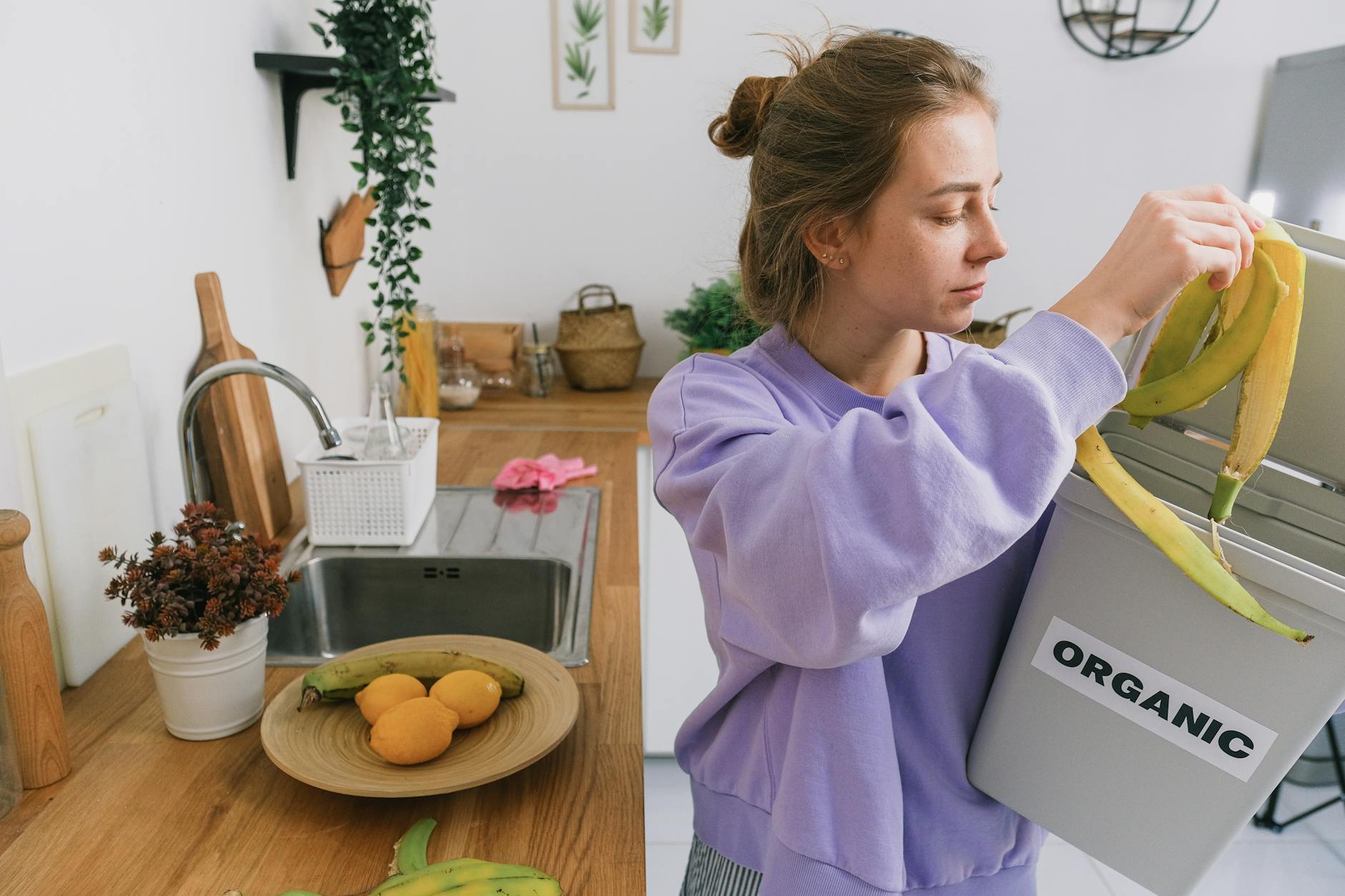
- Keep a small compost caddy on your kitchen counter so that adding tea leaves and coffee grounds becomes part of your morning routine rather than an afterthought.
Coffee Grounds: The Easier Win
If tea bags are complicated, coffee grounds are beautifully simple. There is no packaging concern, no plastic uncertainty, and no labelling to decode. Used coffee grounds from a cafetière, a filter machine, a stovetop moka pot, or a pod machine (once removed from the pod) go straight into the compost with no hesitation required.
A neighbour of mine who runs a small allotment in Leeds swears by coffee grounds as one of his most reliable compost accelerators. He collects used grounds not just from his own kitchen but from a local independent café on his street, which used to throw away several kilograms of spent grounds per week. Now they bag it up for him. This kind of arrangement is more common than you might expect — many UK coffee shops, including some branches of larger chains, will give away used grounds if you simply ask. Costa Coffee and various independent cafés have been known to participate in schemes where grounds are offered free to gardeners.
The one thing to be mindful of with coffee grounds is quantity and balance. Grounds are acidic, and adding them in very large quantities can affect the pH of your compost. In a balanced, active heap with plenty of brown material — cardboard, dry leaves, shredded paper — this is rarely a serious problem because the overall system buffers itself. But if you are receiving industrial quantities of café grounds, consider spreading them across your garden as a mulch as well as adding them to the compost. Blueberries, rhododendrons, and azaleas thrive in acidic conditions and will actively benefit from a coffee ground mulch around their base.
There is also a persistent claim circulating in gardening circles that coffee grounds deter slugs. The evidence for this is fairly mixed — some gardeners swear by it, others have seen no effect whatsoever. What is more reliably documented is that earthworms respond well to moderate quantities of coffee grounds in the soil, which is a straightforward benefit for any gardener.
Getting the Balance Right in Your Heap
Understanding how tea and coffee fit into the overall balance of your compost is genuinely useful. Composting works best when you maintain a reasonable ratio of nitrogen-rich “greens” to carbon-rich “browns.” Tea leaves and coffee grounds both sit firmly in the greens category. This means they need to be balanced out with carbon materials to prevent your heap from becoming a wet, smelly, anaerobic mess.
Brown materials include things like cardboard egg boxes, torn-up corrugated cardboard, dry autumn leaves, shredded newspaper, straw, and wood chip. A good rule of thumb is to aim for roughly equal volumes of greens and browns, though experienced composters will tell you this is more of a starting guideline than a hard rule. What you are really aiming for is a heap that feels moist but not soggy, that has some warmth to it, and that does not smell unpleasant.
When I got my first compost bin from Sheffield City Council — they ran a subsidised scheme selling Green Johanna bins for around £20, a bargain that many UK councils offer through the Getcomposting website — I made the classic beginner’s mistake of adding too many kitchen greens without enough brown. The heap turned slimy and started to smell. A few sessions of tearing up cardboard boxes and mixing them through the heap sorted it out within a couple of weeks.
Tea bags and coffee grounds, because they are added in small daily quantities, rarely cause this imbalance on their own. It is when people add them alongside large quantities of other greens — grass clippings, vegetable trimmings — that problems can develop. The simple fix is always to have a supply of brown material within arm’s reach of your compost bin, so you can add a layer of brown every time you add a significant amount of green.
What About Compostable Coffee Pods?
This deserves a mention because pod machines are now extremely common in British homes. Brands like Nespresso, Tassimo, and Dolce Gusto have become kitchen staples, and the environmental impact of the pods themselves has been a subject of debate for years.
Some newer pods are marketed as compostable or biodegradable. The important
distinction to make here is between home-compostable and industrially compostable. A pod labelled as industrially compostable will only break down properly in a commercial composting facility that maintains high temperatures and specific conditions — it will not degrade effectively in your garden bin. Home-compostable pods, by contrast, are designed to break down in a standard domestic compost heap, though they typically take longer than organic matter like coffee grounds or vegetable peelings. Always check the packaging carefully, and if it says “industrially compostable” only, your best option is to find out whether your local council accepts them in food waste collections rather than putting them in your heap.
The grounds inside compostable pods are, of course, perfectly good for the compost bin regardless of what you do with the pod itself. If you have a pod that you are unsure about, simply tear it open, tip the spent grounds into your compost, and dispose of the pod casing through whatever channel is appropriate. Some councils in England, Scotland, and Wales have specific guidance on this, so it is worth a brief check on your local authority’s waste and recycling pages if you go through pods in significant quantities.
It is also worth noting that Nespresso runs its own pod recycling scheme in the UK, with collection points at participating retailers and freepost bags available on request. This is separate from composting entirely, but it is a practical option for households that use aluminium pods and want to keep them out of general waste.
Conclusion
Tea bags and coffee grounds are among the most straightforward and genuinely useful additions you can make to a home compost heap. Loose-leaf tea and paper tea bags go in without hesitation. Plastic-sealed bags should be torn open and their contents composted, with the mesh discarded. Coffee grounds are a reliable nitrogen source that benefit compost, soil, and worm bins alike. The main thing to keep in mind across all of these is balance — pile in too many wet, nitrogen-rich materials without a corresponding amount of brown carbon matter, and your heap will let you know about it fairly quickly. Get that balance right, and your kitchen’s daily tea and coffee habit becomes a consistent, low-effort contribution to healthier garden soil.