How to Tell When Your Compost Is Finished
How to Tell When Your Compost Is Finished
One of the most common questions among new composters is knowing when to stop waiting and start using. You have been patiently adding kitchen scraps and garden waste to your bin for months, turning it occasionally, and now you are looking at a dark, crumbly mass and wondering: is this ready? Getting this judgement right matters. Use compost too early and you risk damaging plant roots, introducing pathogens into your soil, or simply wasting material that has not yet broken down into a genuinely useful form. Wait too long and you may miss the optimal window, or find that finished compost has begun to compact and lose some of its beneficial structure.
The good news is that finished compost has several reliable, observable characteristics, and with a little practice you will be able to assess your heap confidently without any specialist equipment. This guide walks you through everything you need to know, from the sensory checks you can do in your garden to the practical steps for testing and using your finished product.
What Finished Compost Actually Is
Before you can identify finished compost, it helps to understand what has actually happened inside your bin. Composting is a biological process driven by bacteria, fungi, worms, and other decomposers. These organisms break down organic matter — vegetable peelings, cardboard, grass clippings, fallen leaves — into a stable, humus-rich material that plants can absorb and soils can benefit from over a long period.
The end product is sometimes called mature compost or stabilised compost. At this stage, the microbial activity that drives decomposition has largely completed its work. The material is no longer “hot” in the active sense (though a finished pile may still be slightly warm in cool weather), it no longer has a strong or unpleasant smell, and it has fundamentally transformed in texture and appearance. What began as identifiable food scraps and plant material has become something that looks, smells, and behaves more like rich woodland soil than like garden waste.
In the UK, the composting season broadly follows the climate. Bins tend to be most active from spring through to early autumn, when warmth and moisture drive microbial activity. A hot, well-managed bin can produce finished compost in as little as eight to twelve weeks during summer. A cold-composting setup — which is far more common in UK back gardens — typically takes six months to two years, depending on what you add and how often you turn the heap.
The Key Signs That Your Compost Is Ready
There is no single magic test, but a combination of visual, tactile, and olfactory checks will give you a clear picture. Run through all of these before deciding your compost is finished.
Appearance
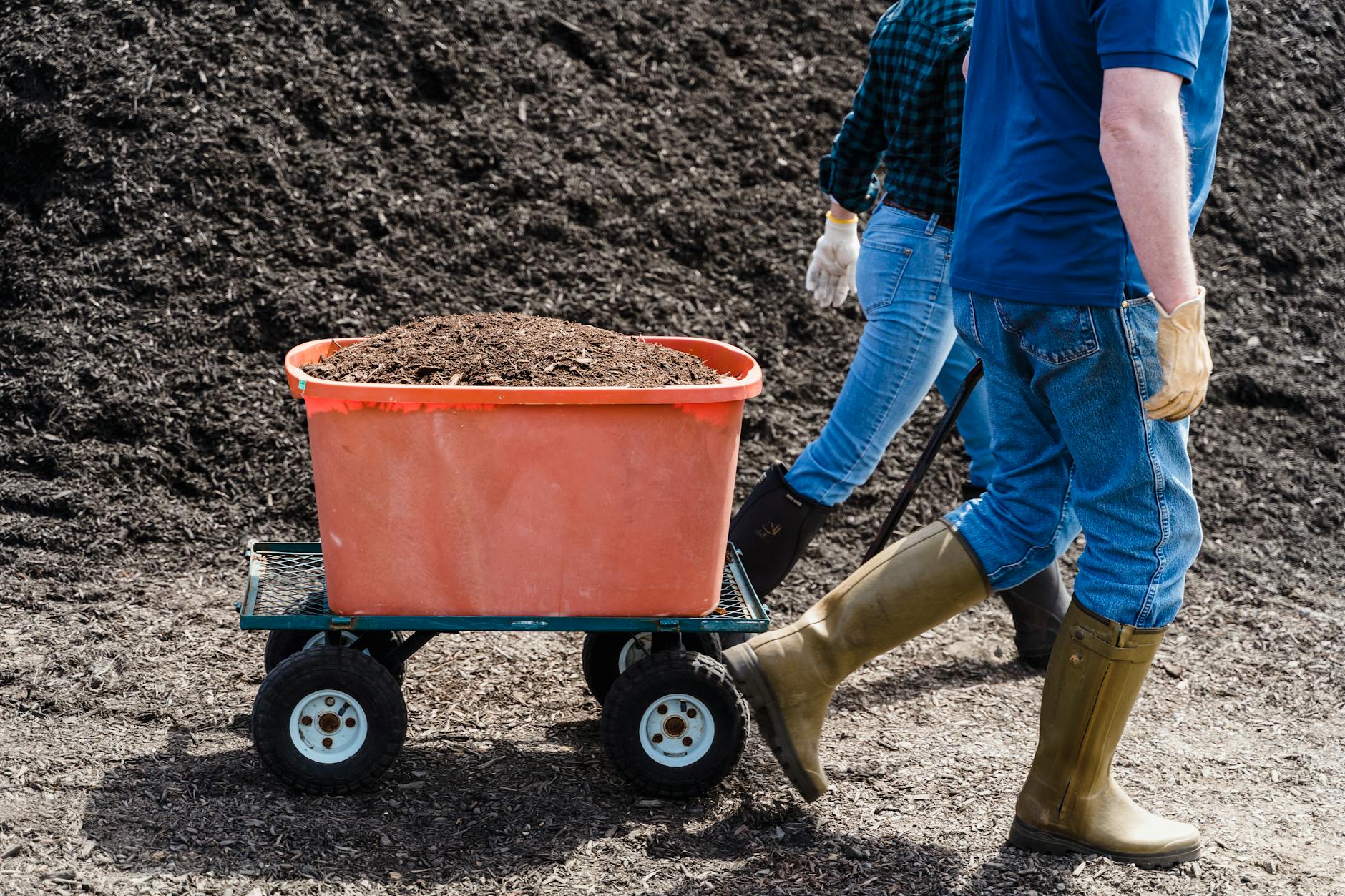
Finished compost should be dark brown to near-black in colour. Think of the rich, dark earth you find under a thick layer of leaves in a woodland — that is the kind of tone you are aiming for. It should look uniform and consistent throughout, without large patches of obviously undecomposed material.
Look closely at the texture. It should be crumbly and granular, not sticky, slimy, or compacted into dense clumps. Some slight clumping is acceptable if it breaks apart easily when you squeeze it in your hand. If you can still identify distinct pieces of carrot peel, eggshell, shredded paper, or twigs, the compost is not yet finished. Woody material is often the last thing to break down fully, so if you see fragments of woody stems but everything else looks mature, you have two options: remove the woody pieces and compost them further, or wait a little longer before using the batch.
Smell
This is one of the most reliable indicators. Finished compost smells earthy — often described as smelling like fresh soil or damp woodland after rain. In the UK this is sometimes compared to the smell of a moist forest floor or a field after rainfall, that clean, mineral, slightly fungal scent that is genuinely pleasant rather than offensive.
If your compost smells sour, ammonia-like, sulphurous, or like rotting food, it is not finished. A sour or vinegary smell usually means the pile is too wet and has turned anaerobic. A smell of ammonia suggests too much nitrogen-rich green material. Both of these issues need correcting before the compost is ready to use. Add more dry brown material — cardboard, dried leaves, or woody prunings — turn the heap thoroughly, and check again in a few weeks.
Texture and Feel
Take a small handful and squeeze it. It should feel slightly moist — like a wrung-out sponge — but not waterlogged or bone dry. It should crumble and fall apart rather than sticking together in a dense, clay-like ball. If it feels gritty and dusty, it may have dried out too much, which can slow the final stages of decomposition; add a little water and mix it in.
Finished compost has a loose, open structure that holds together lightly but does not compact. This is actually one of its most valuable properties: when added to soil, that structure helps improve drainage in heavy clay soils and water retention in sandy soils.
Temperature
An active compost heap generates its own heat as bacteria break down organic matter. A hot heap — one that has been properly built and turned regularly — can reach temperatures of 55°C to 70°C at its core. As decomposition completes, this internal heat drops. A finished pile will be close to ambient temperature, meaning it should feel no warmer than the surrounding air when you push your hand into the centre of the heap.
If your bin still feels noticeably warm inside, microbial activity is ongoing and the compost is not yet ready. This is more of a consideration in hot composting systems, or in tumblers (such as those sold by the Original Organics range or Hotbin systems, both popular in the UK market). Cold composting bins — the standard black plastic dalek-style units distributed free or at low cost by many UK councils — rarely heat up significantly, so temperature is less useful as a diagnostic tool for those.
Presence of Worms
In a cold compost bin, worms are actually a helpful sign that things are progressing. However, in a finished, mature pile, you will typically find fewer worms because there is less for them to eat. If your compost is teeming with worms and the material still looks varied and undecomposed, it is a sign of active processing still underway. A lower worm population in a dark, crumbly, earthy-smelling heap is a reasonable indicator of maturity.
The Bag Test: A Practical Way to Check Maturity
If you want a slightly more structured check, the bag test is a simple method used by allotment holders and keen gardeners across the UK. It requires no equipment and gives you a useful indication of whether decomposition has truly stopped.
- Take a small sample of your compost — roughly a cupful — from deep within the heap, not just from the surface.
- Place it in a sealed plastic bag or a small sealed container.
- Leave it somewhere at room temperature for approximately one week.
- After seven days, open the bag and smell the contents carefully.
- If the compost still smells earthy and pleasant, with no sour or rotting odour, it is likely stable and finished.
- If the smell has turned unpleasant — sour, ammonia-like, or sulphurous — active decomposition is still occurring. Return the compost to the heap and wait another four to six weeks before testing again.
This test works because finished, stabilised compost does not produce significant off-gases when sealed. If decomposition is still active, even at a low level, sealing the material traps the gases produced and makes them detectable when you open the bag. It is not a laboratory test, but it is surprisingly reliable for home gardeners.
What to Do With Partially Finished Compost
Even experienced composters sometimes end up with a bin that is partly finished — perhaps the lower section looks ready but the top third is still quite raw. This is common in dalek-style bins, where fresh material is added to the top and the oldest material sits at the bottom. Most UK council-supplied bins have a hatch at the base specifically to allow you to access the most mature material while continuing to add fresh waste to the top.
If you pull out your finished material from the base and find some unfinished chunks mixed in, simply sieve the compost. A garden riddle — a large-mesh sieve — works well for this. Anything that does not pass through the sieve goes back into the heap to continue decomposing. You can buy garden riddles cheaply from most UK garden centres, or from suppliers such as Harrod Horticultural, Burgon and Ball, or Implementations (which supplies tools for allotments and kitchen gardens).
Partially finished compost can also be used as a mulch on beds where it will not come into direct contact with plant roots. Spread it on the surface in autumn and let the worms and weather do the final work over winter. By spring it will have integrated into the soil and lost any remaining rawness.
Common Mistakes That Lead to Unfinished Compost
Understanding why compost stays unfinished helps you avoid these problems with your next batch.
- Too much green material with not enough brown: Grass clippings, vegetable peelings, and coffee grounds are high in nitrogen (green materials). Without enough carbon-rich browns — cardboard, dried leaves, straw, paper — the pile becomes wet, slimy, and anaerobic. The correct ratio is roughly two to three parts brown to one part green by volume.
- Not enough moisture: A dry heap is a dead heap. If your compost bin is in a sheltered spot and rain rarely reaches it, you may need to water the pile occasionally, especially during dry UK summers.
- Too much moisture: Equally, a waterlogged bin — particularly common in the wet UK climate — will produce anaerobic conditions. Make sure your bin has some drainage at the base and is not sitting in standing water.
- Never turning the
pile: Turning introduces oxygen and mixes materials, speeding up decomposition. Even turning once a month can make a significant difference to how quickly your compost matures.
If your heap has stalled completely, it is worth doing a full audit. Check the moisture level by squeezing a handful — it should feel like a wrung-out sponge. Check the balance of materials and add browns if it smells or greens if it looks dry and lifeless. A good turn with a fork, working material from the outside into the centre where temperatures are highest, will often restart the process within a week or two.
Patience is also part of the process. In the cooler UK climate, especially through autumn and winter, decomposition slows considerably. A heap that appears stuck in November may simply be resting, and will pick up again as temperatures rise in spring. Cold composting — leaving a heap largely undisturbed — is a perfectly valid approach, though it typically takes twelve to eighteen months rather than the three to six months achievable with a more actively managed bin.
Conclusion
Knowing when your compost is finished comes down to observation and familiarity with the material. Look for a dark, crumbly, earthy-smelling product that bears no resemblance to what you originally put in. Do not be discouraged by the odd unfinished twig or eggshell — screen them out and return them to the next batch. Whether you are a first-time composter with a single plastic dalek bin or an experienced gardener managing multiple bays, the principles are the same: the right balance of materials, adequate moisture, and enough time. Get those elements right, and your garden waste will reliably become one of the most useful things you can add to your soil.